For technology companies using AI in research and product development, the inventorship question is no longer theoretical. AI systems can generate design options, suggest molecular candidates, propose architectures, summarize prior art, and produce technical outputs that may look inventive. The business risk is not that AI-assisted inventions are categorically unpatentable. The risk is that companies will create valuable technology without preserving the record needed to own it.
Under current U.S. law, the answer begins with a hard boundary. An AI system cannot be named as an inventor. The Federal Circuit held in Thaler v. Vidal, 43 F.4th 1207 (Fed. Cir. 2022), that the Patent Act requires inventors to be natural persons. The Supreme Court has not addressed AI inventorship in a merits ruling, so the Federal Circuit’s holding remains the controlling authority. Its only relevant recent action was denying certiorari in a parallel AI copyright case in early 2026, which left the human-only inventorship rule undisturbed. The USPTO’s AI-assisted inventorship guidance likewise treats AI systems, including generative models, as tools used by human inventors.
That boundary matters, but it is not the end of the analysis. The more practical question is whether a human being can identify and support the human act of conception behind the claimed invention. That is where patent strategy becomes operational discipline.
The Real Question Is Human Conception
The USPTO’s November 2025 revised guidance treats AI-assisted invention as an application of ordinary inventorship principles rather than as a separate regime. The same legal standard applies whether a human used a microscope, simulation software, a research database, a generative model, or no tool at all.
For each human inventor, the question is whether that person conceived the invention: whether the complete and operative idea existed in the inventor’s mind with enough definiteness that ordinary skill could reduce it to practice. For multiple human contributors, traditional joint inventorship principles apply among those people. The question is not whether each person touched the AI workflow, but whether each named inventor made a legally significant contribution to the claimed invention.
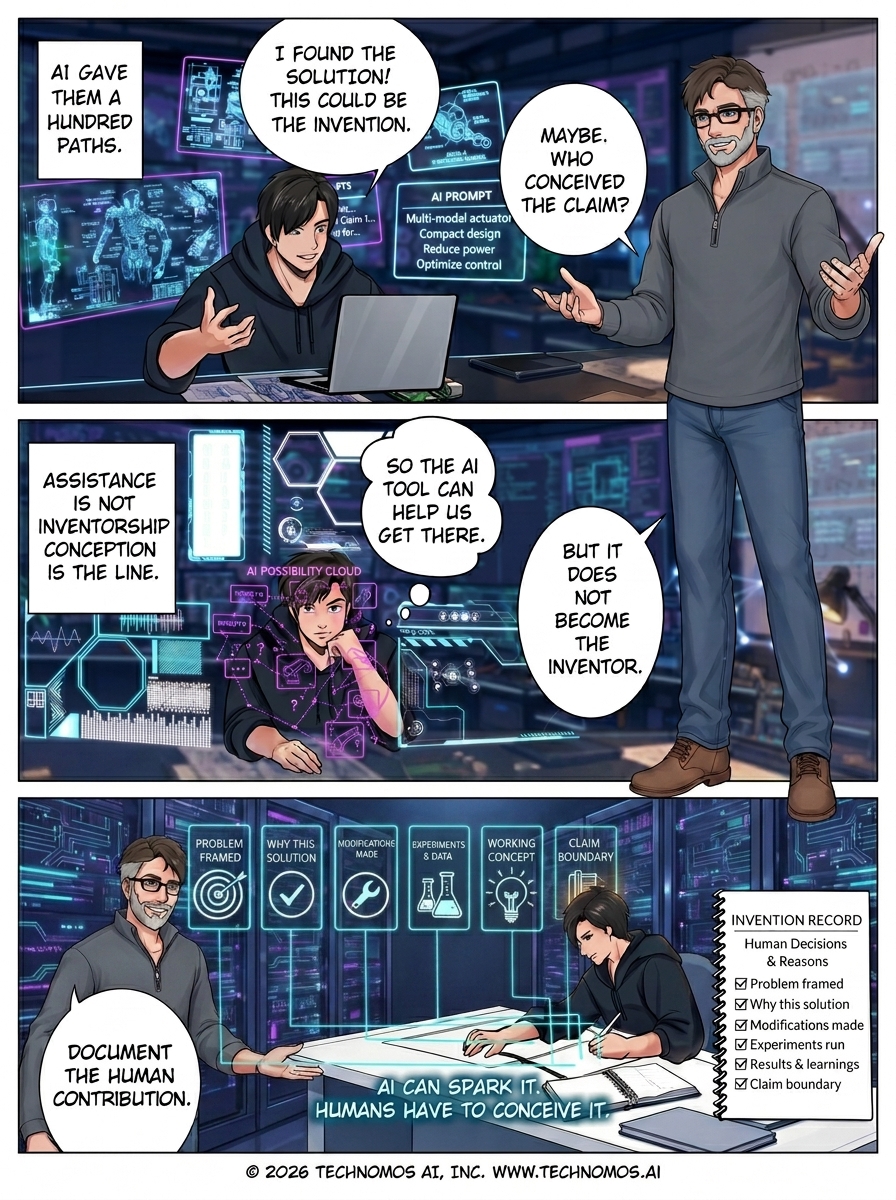
This matters because many AI-assisted workflows blur the record. A model may propose ten candidate architectures. An engineer may reject nine, modify the tenth to satisfy latency, security, and deployment constraints, validate the modified architecture experimentally, and recognize that it solves a product-critical technical problem. The useful record is not merely that the model produced an output. The useful record is how human technical judgment transformed AI-assisted exploration into the claimed solution.
Months later, the legal team may see only the final disclosure. If the record does not show who made the inventive decisions, the portfolio inherits avoidable risk. The wrong lesson is that companies should avoid AI in invention workflows. The better lesson is that AI-assisted invention needs better invention capture.
Invention Capture Becomes Portfolio Infrastructure
For patent purposes, merely owning an AI system, supervising a team that used one, or appreciating the usefulness of an AI output without materially shaping the claimed solution is legally insufficient to establish inventorship. The stronger record identifies the human contribution: who framed the technical problem, who selected the constraints, who designed the experiment, who modified or rejected outputs, who recognized the claimed architecture, and who connected the result to product requirements.
That record should be built before the application is drafted. Waiting until prosecution, diligence, litigation, or acquisition review may be too late.
One immediate risk deserves explicit attention. Entering invention details into consumer-tier AI platforms before filing can compromise confidentiality and, depending on the platform terms and facts, may create novelty-bar or trade-secret risk. Inputs may be retained, used for model training, or accessible to third parties. In some circumstances, that may start the one-year U.S. grace period clock, and in absolute-novelty jurisdictions like the EU, China, Japan, and South Korea, it may jeopardize patentability. Before using external AI tools on invention details, companies should decide whether to file first, use governed enterprise tools, or keep the work inside confidential systems.
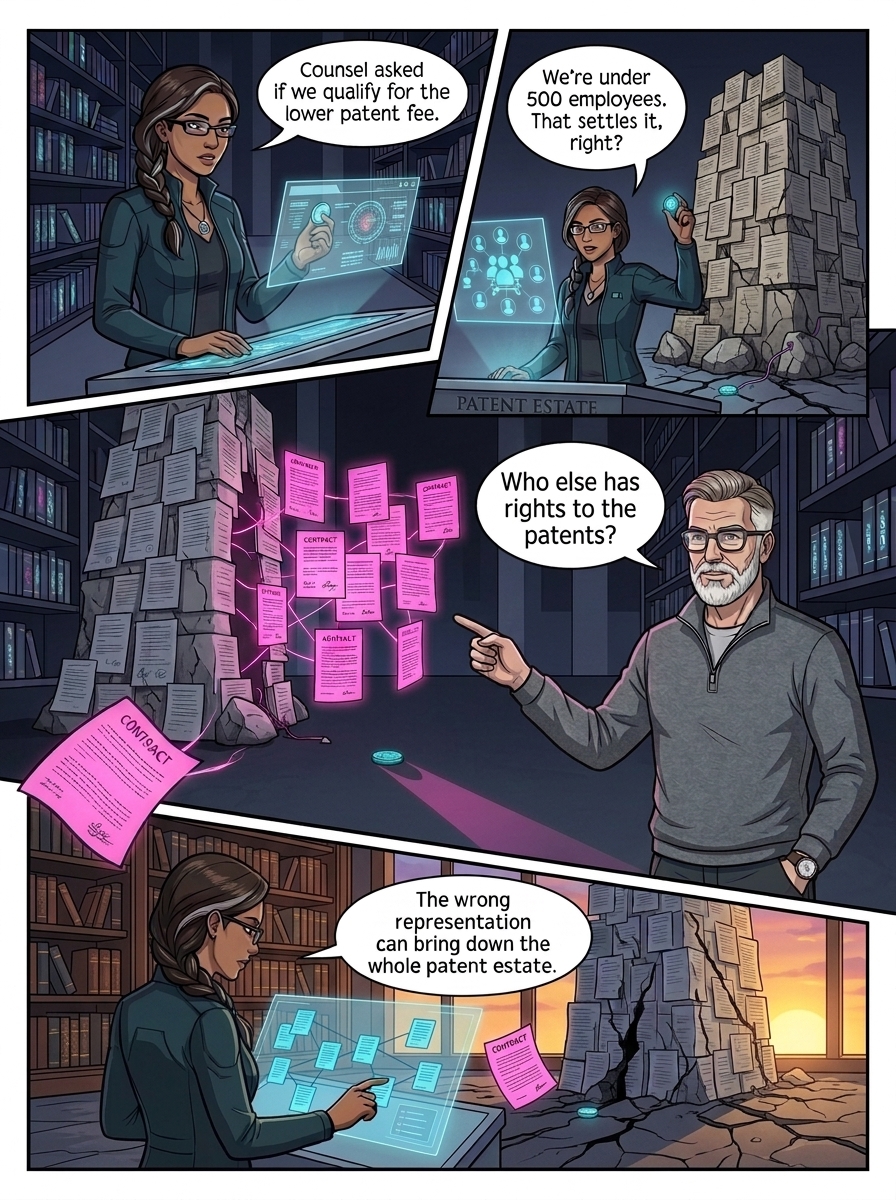
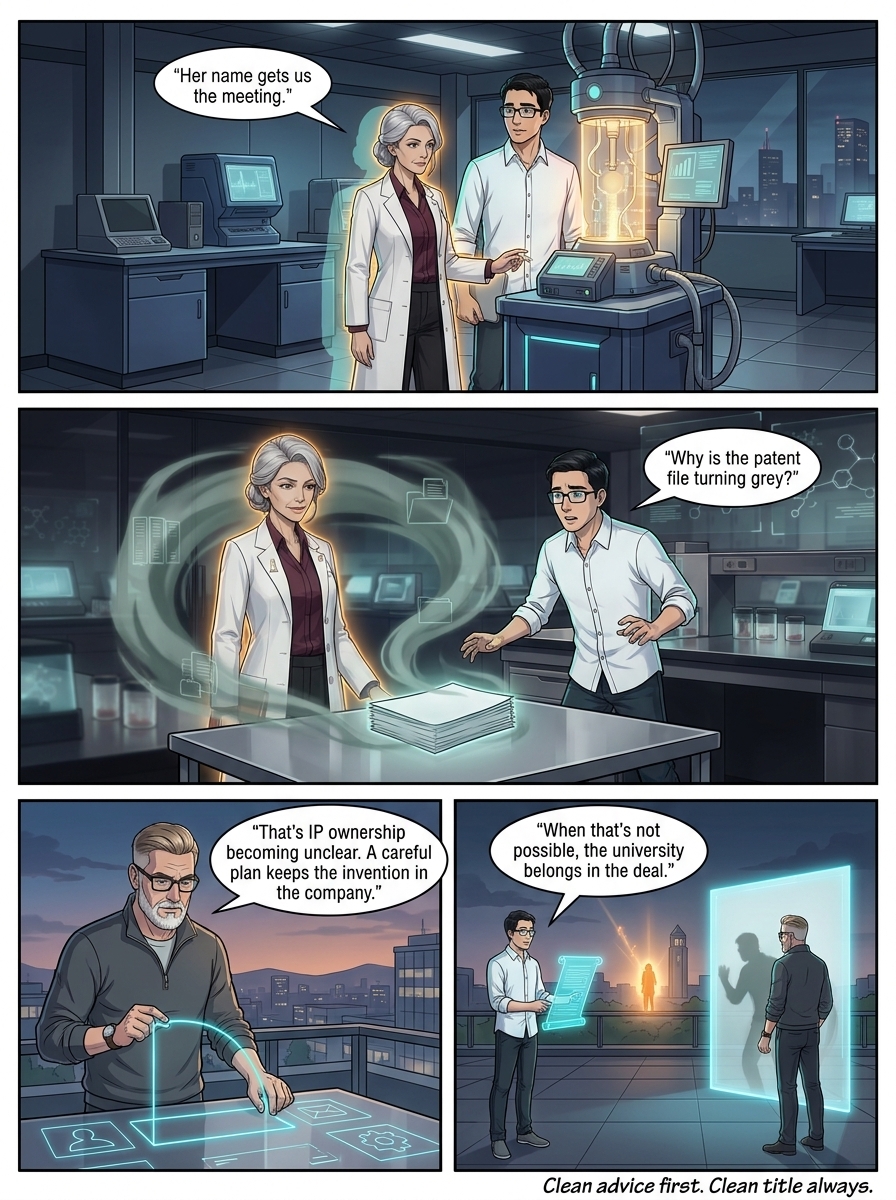
Assignment and ownership documentation still matter, but they cannot substitute for naming the correct human inventors. A company owns patent rights only if inventorship is properly determined and the relevant rights are assigned. Before a company can rely on the asset, it should be able to explain who conceived the claimed invention and why.
Invention disclosures should ask how AI tools were used, but prompt and output history should not be treated as self-proving. A weak record says the AI proposed the architecture. A stronger record says the engineer defined the latency and security constraints, rejected unsuitable outputs, modified one candidate architecture, validated the modification, and recognized the claimed combination as solving the deployment problem.
This is a portfolio-quality issue. A patent family that cannot support human inventorship cleanly may be less useful in financing, licensing, enforcement, or acquisition diligence. Even strong technology loses bargaining leverage when conception is ambiguous. Buyers, investors, and counterparties care less about whether AI was used than whether the company owns enforceable rights in claims that protect the business.
The Discipline Is Claim-Level Mapping
The practical discipline is claim-level mapping. For each important claim set, the company should be able to connect the claimed features to human contributors and source materials. That does not mean every prompt or brainstorming note belongs in a patent application. It means the company maintains a reliable internal record showing why the named inventors are the inventors, capable of answering who made the inventive decisions, which human contributions correspond to the claims, and what evidence shows the path from AI-assisted exploration to human conception
The USPTO’s guidance lowers the temperature. AI is not a mystical co-inventor or a contaminant that destroys patentability. It is a tool, and that tool can make the invention record messy unless companies design workflows that preserve human judgment. For AI-native companies, this is not administrative burden. It is strategic infrastructure, and the same systems that document inventorship produce cleaner claim architecture and more reliable diligence narratives.
AI can accelerate technical exploration and expand the search space. But under U.S. patent law, the patent system still asks a human question: who conceived the claimed invention? The companies best positioned to own the output will not be the ones that merely used the best tools. They will be the ones that can prove where human invention happened.