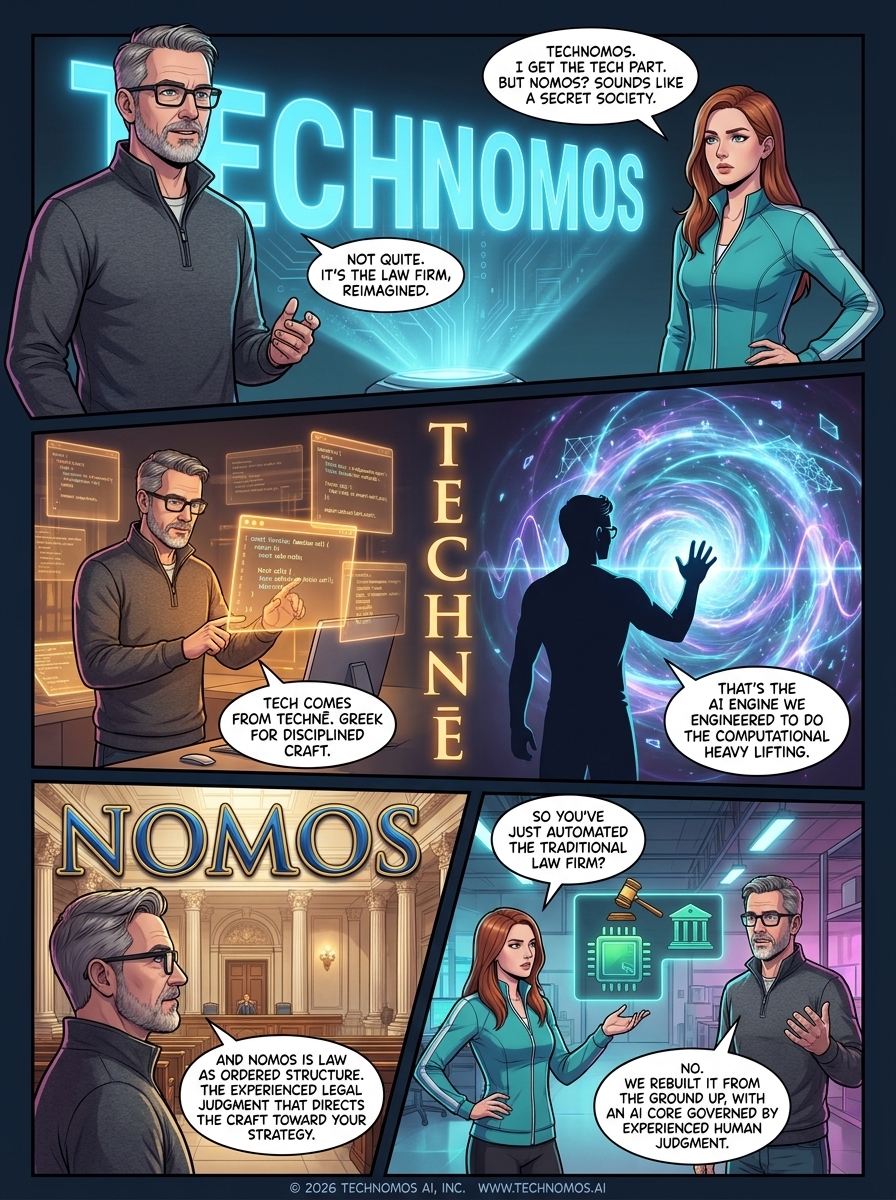
TechNomos AI was founded after watching something specific happen inside traditional law firms. Not bad lawyering. Something more structural: AI being deployed to improve isolated tasks while the operating model underneath those tasks stayed exactly as it was. Research faster. First drafts quicker. Individual workflows accelerated. The strategic context still fragmented. Decisions still made matter by matter. Institutional knowledge still reconstructed from scratch each time a new engagement opened.
That is not a technology problem. It is a firm design problem. Tools can improve a workflow, but they do not by themselves change incentives, staffing, pricing, review standards, data architecture, or the unit of work around which the firm is organized.
We built TechNomos AI to redesign all of it.
The matter-by-matter model was adequate for a different era.
The operating model of most law firms is organized around a specific unit of work: the matter. A client engages the firm. Work proceeds. The matter closes. The knowledge generated – strategic context, prior positions, risk posture, competitive landscape – is stored somewhere, usually across files, email archives, and attorney grey matter. The next matter opens and the process restarts.
The problem with this model is not execution quality. Lawyers can be strong individual practitioners while the function they are serving lacks coherence. When decisions are made in isolation, spend concentrates in the wrong places, strategic connections go unmade, and capital is allocated across a series of individually defensible but collectively incoherent choices. That is a management failure as much as a legal one.
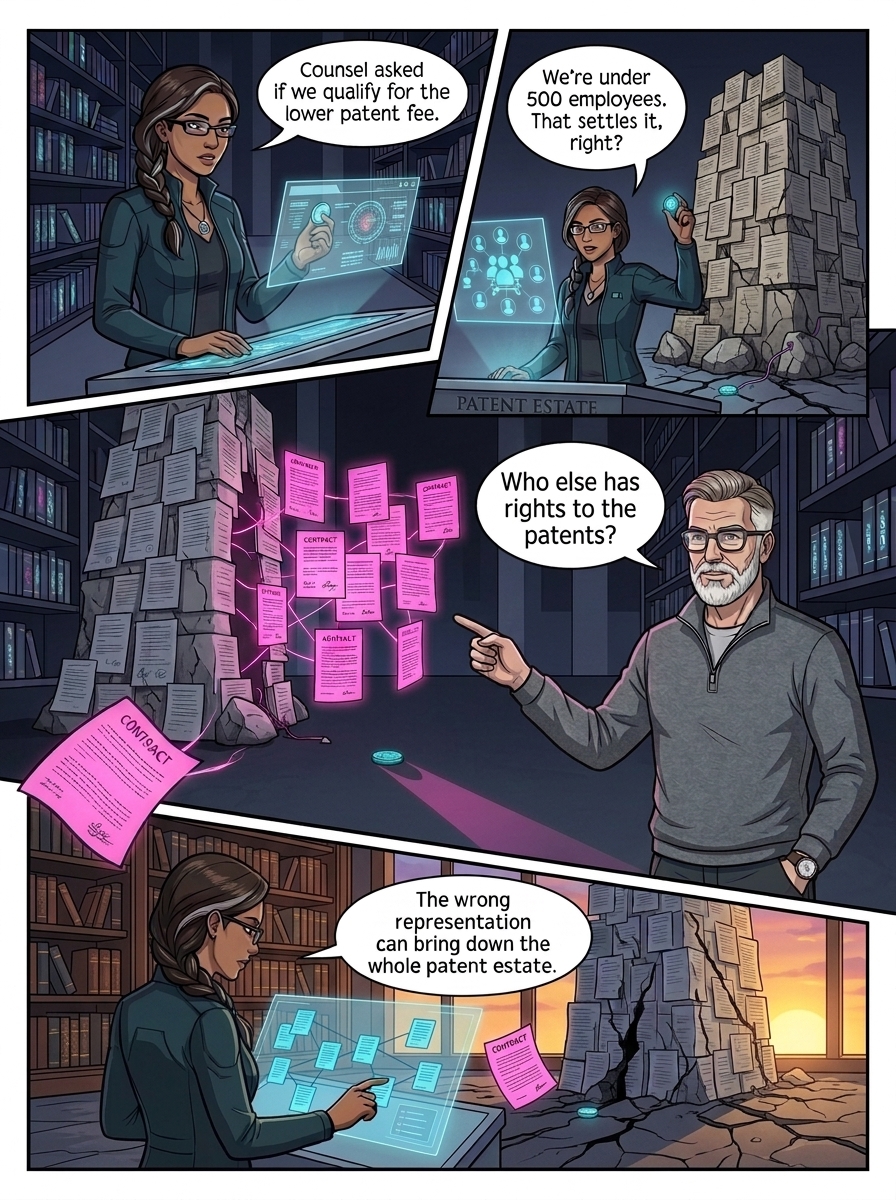
Consider what this means in practice for a technology company managing its patent portfolio – one of the most capital-intensive legal functions a company runs. Each filing decision, continuation, prosecution position, and maintenance fee is a capital allocation choice. Those choices should be connected to product roadmap, competitive position, and long-term control of the technology stack. In a matter-by-matter workflow, they rarely are. Prior art reviewed for one application does not inform the next. Prosecution positions in one family do not connect to decisions in adjacent ones. The portfolio that results is not a strategic asset. It is an accumulated cost.
When isolated workflows get faster, this problem does not diminish. It compounds. A firm can produce more work product more quickly while deepening the same underlying misalignment. Capital allocation requires comparison across alternatives. A matter-by-matter workflow obscures those alternatives because each decision is evaluated inside its own file rather than against the full set of competing uses of the client’s resources.
The industry is accelerating in the wrong direction. We’re building in the right one.
The capability required to build a structurally different model did not exist five years ago. Structuring and reasoning across the full context of a client relationship – prior positions, competitor activity, product landscape, agreements, regulatory environment, commercial priorities, accumulated continuously across every engagement – was not achievable at a cost or reliability that could anchor a law firm’s operating model. It is now.
The incumbent firms are deploying AI aggressively. But they are deploying it to make the existing model faster rather than to replace it. This is structurally inevitable. The billable matter is the unit of work, the unit of pricing, and the unit around which the partnership is organized. A firm cannot redesign its unit of work while that unit of work is paying the partners. The constraint is not willingness. It is architecture.
TechNomos AI is not constrained by that architecture. We did not inherit it. We are designing from a blank page, with a deliberate answer to a question that traditional practice has never had to answer: what does a law firm look like when the full strategic context of the client relationship persists, compounds, and is present at the start of every conversation?
The knowledge layer we are building deepens with every engagement. Every matter adds structured context that the next matter inherits. That advantage does not erode. It widens. Copying the outputs of a better architecture does not give you the architecture.
We are not responding to the AI era in legal practice. We are defining what legal practice looks like inside it. And we intend to keep defining it.
This is only the beginning of that story. In the weeks and months ahead, as TechNomos AI grows, we will continue sharing how this model works, what we are learning, and why we believe legal practice is entering an architectural transition, not merely a technological one.